01 / The short answer
Do runners need
electrolytes?
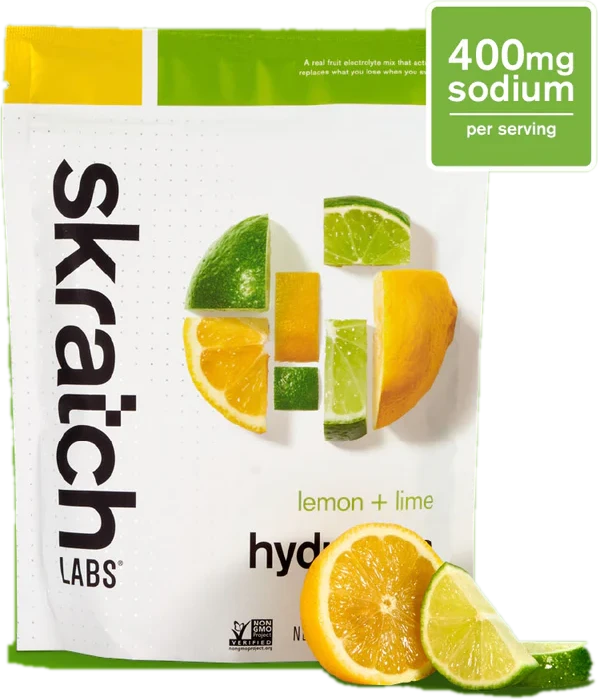
For runs under an hour in mild weather, water is enough. For longer runs, hot days and heavy or salty sweaters, add electrolytes, mainly sodium. A good starting point is a drink with about 400 mg of sodium per 500 ml, 1 to 2 servings per hour, drunk to thirst. Aim to keep your sweat loss under 2% of body weight.
Sweat is mostly water, but every liter carries salt with it. Sodium is by far the biggest part, on average close to 1 gram per liter, with smaller amounts of potassium, calcium and magnesium. On a long or warm run, that adds up to several grams of sodium leaving your body.
Sodium is what helps your body hold on to the fluid you drink. Replace water without it, and more of it passes straight through. That is why a drink with electrolytes keeps you hydrated better than the same amount of plain water.
What happens when you fall behind
- Above 2% of body weight lost: endurance performance starts to drop, especially in heat. Heart rate climbs and the same pace feels harder.
- Too much plain water: drinking far more than you sweat dilutes the sodium in your blood, a dangerous condition called hyponatremia. It is most common in slower marathon runners who drink at every aid station.
- The fix for both: drink to thirst, use a drink with sodium on long and warm runs, and never drink more than you sweat.
A 70 kg runner who loses 1.4 kg, about 1.4 liters of sweat, is at the line. On a warm day that can happen in under an hour. A drink plan keeps you well below it, and keeps the pace you trained for.